Yes, you can get married while deployed. The most reliable route is a live online ceremony under Utah law: both of you appear on video from wherever you are, a Utah-licensed officiant performs the wedding, and you walk away with a certificate that’s legal in all 50 states. A few states also allow proxy marriage for deployed troops, where a stand-in fills in for the absent partner. Here’s how each one actually works.
We do a lot of these. About half our couples are military, and a good chunk of them are mid-deployment when they book. One partner is on a base in Poland or a ship somewhere with a satellite connection, the other is back home in Texas, and they want to be married before the next thing on the calendar moves. So this guide is the practical version, not the theory.
Your Three Real Options
There are really three ways to get legally married when one of you is deployed. Two of them work right now from wherever you’re standing. The third means waiting.
1. A live online ceremony (this is what we do)
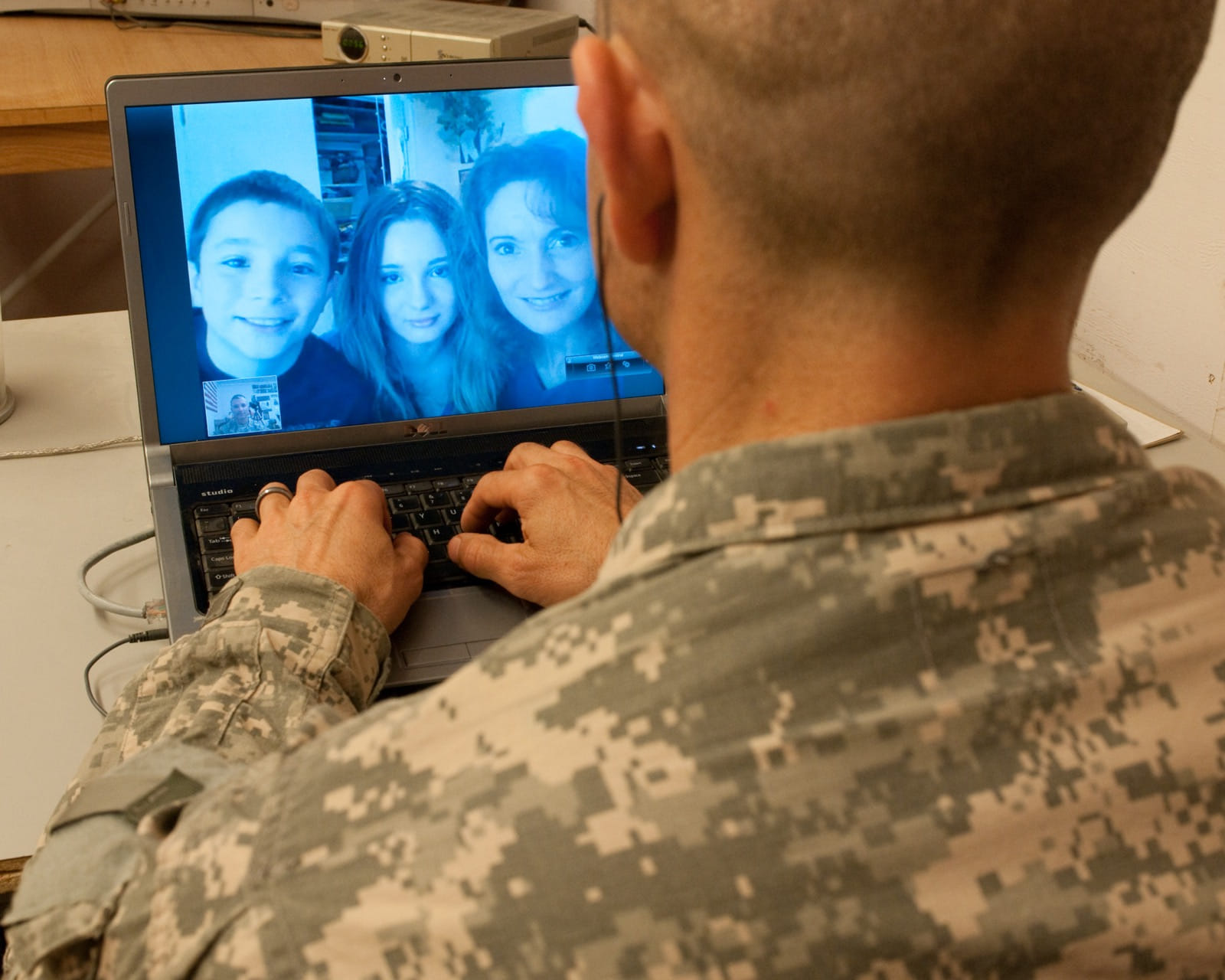
Both partners join a video call. An officiant physically located in Utah performs the ceremony, you both say your vows on camera, witnesses join the same call, and the officiant files everything with Utah County. You get a certified digital certificate, usually the same day, and it’s recognized in all 50 states under the Full Faith and Credit Clause.
The deployed partner doesn’t need to be in the U.S. You can be on the other side of the world. The only hard requirement is a connection good enough to hold a video call for the length of the ceremony, which isn’t long. No residency in Utah, no citizenship requirement, no power of attorney.
This is the one that fits the most deployment situations, because you’re both actually present at your own wedding. Nobody stands in for anybody.
2. Proxy marriage
In a proxy marriage, the absent partner doesn’t appear at all. A stand-in, the “proxy,” takes their place and says the vows for them. It has a long history, and it still exists specifically for situations like deployment.
The catch is availability. Only a handful of states allow it, and mostly for active-duty military. Texas allows a proxy marriage only when one spouse is deployed. Montana allows double-proxy marriage, where both partners are absent and two stand-ins do the ceremony, but only if one partner is active military or a Montana resident. Colorado and Kansas are the other names that come up. Veterans who’ve separated don’t qualify, and neither do civilian couples, so for a lot of people reading proxy guides the option was never on the table. The rules are specific, the paperwork usually includes a power of attorney naming your proxy, and a marriage that’s valid in one of these states isn’t always recognized cleanly elsewhere. Price is the other surprise: the main double-proxy services publish packages between $570 and $720, roughly double what a Utah online ceremony runs all-in.
If you want the full breakdown of how proxy stacks up against the online route, we wrote a separate comparison of proxy marriage and online marriage. Short version for a deployed couple: proxy can work, but it’s narrower and slower than most people expect.
3. Wait for R&R or leave
Some couples decide to just wait until the deployed partner is home on leave and do it in person. Nothing wrong with that if your timeline allows it. The thing to know is the cost of waiting isn’t only emotional. If a housing allowance bump or benefits are riding on the marriage date, every month you wait is a month you don’t get back, because BAH at the higher rate is back-paid to your wedding day and no earlier. More on that below.
The Deployment Details Nobody Warns You About
Time zones and odd hours
When you’re eight or eleven or thirteen hours off from home, “let’s pick a time” turns into a small logistics problem. The deployed partner has duty, watch rotations, and a connection that’s only reliable during certain windows. We’ve run ceremonies at 3am somebody’s time because that was the one slot the deployed partner could reliably get online between shifts. That’s normal for us. Tell us the window that works on your end and we build the ceremony around it, not the other way around.
What the deployed member needs
Less than you’d think. A valid government photo ID, usually a passport or your military ID, and a device that can hold a video call. Both of you upload IDs when you apply for the Utah license. That’s the identity piece handled. There’s no notary requirement and no power of attorney for the online route, which is exactly the paperwork that tends to bog down a proxy marriage from a forward location.
Witnesses can join the call
You don’t need to round up witnesses in the same room. They can join the video ceremony from anywhere, same as you. A buddy in the barracks, a parent back home, your maid of honor three time zones away. They appear on the call, they witness the vows, and it counts.
When the connection wobbles
Deployment internet isn’t gentle. We’ve had a partner’s video freeze halfway through the vows and come back thirty seconds later mid-sentence. It’s fine. We slow down, we wait, we pick up where the connection dropped. The officiant isn’t reading a script on a stopwatch. If the worst happens and a link drops entirely, we work out the timing again and finish. The ceremony being legal doesn’t hinge on a flawless stream, it hinges on both of you being present and saying your vows, and a shaky signal doesn’t change that.
Shipboard is the hardest version of this: bandwidth rationing, EMCON windows, watch rotations that eat your one good time slot. We wrote a separate guide to getting married while deployed on a Navy ship that covers what actually works underway.
You do not need command permission
This one trips people up, so let’s be plain about it: you don’t need your command’s approval to get married. There’s no form your first sergeant signs off on before you’re allowed to marry. Marriage is a personal decision and the military treats it that way. What you do owe your command is the paperwork after, so your spouse gets into the system and your pay reflects the change. That’s notification, not permission. Don’t let a rumor that you need a signature from the chain of command talk you into waiting.
After the Ceremony: DEERS, ID, and BAH
Getting married is the fast part. Turning that certificate into benefits is where the real timeline lives, and it’s worth knowing the order of operations before you start.
Once you have the certified marriage certificate, three things happen:
DEERS enrollment. Your spouse gets entered into the Defense Enrollment Eligibility Reporting System, which is the database that makes the marriage “real” for benefits. If it’s not in DEERS, the military doesn’t see it. This is the step that opens up everything else.
Dependent ID card. Right after DEERS, your spouse can get a military dependent ID, usually in the same visit. That card is their access to base, the commissary, medical, all of it.
BAH at the with-dependents rate. You submit your marriage certificate to finance, and your housing allowance moves from the without-dependents rate to the higher with-dependents rate. This typically shows up in pay within about 30 days, and it’s back-paid to your marriage date so you don’t lose money while the paperwork processes.
That housing allowance change is the reason a lot of couples marry online first and save the big in-person celebration for later. The higher rate can’t start before you’re legally married, and there’s no back pay for the time you spent engaged. We break down the exact numbers, timing, and forms in our guide to the military BAH increase after marriage, including how it works for dual-military couples. If both of you are in uniform, the rules are different, so read that one before you plan around a specific dollar amount.
One note we’re careful about: we describe what the marriage certificate does, which is give you a legal U.S. marriage recognized in every state. For taxes and benefits, talk to your finance office or a tax professional. For anything immigration-related, one rule matters up front: U.S. immigration law expects a couple who married while apart to spend time together in person after the wedding before the marriage counts for a petition, so talk to an immigration attorney about your case. We can get you legally married. We can’t be your lawyer.
So Which Option Should You Pick?
If you’re deployed and you want to marry soon, the online ceremony is usually the straightest line. You’re both present, there’s no proxy paperwork, no residency requirement, and the certificate is good in all 50 states the moment it’s filed. Proxy marriage is a genuine option in a few states if that fits your situation, but it’s narrower and it moves slower. Waiting for leave is fine if your timeline and your benefits math both allow it.
We built our military wedding service for exactly this: couples who can’t stand in the same room but want to be married anyway. If you’re ready to see packages and get the license started, our pricing page lays it out. Send us the time window that works from your end of the world, and we’ll handle the rest.