If you’re considering an online marriage through Utah but live in another state, you’ve probably had the thought: “Will this actually count back home?”
It’s a reasonable question. Marriage laws vary wildly from state to state. Some still require wet-ink signatures and in-person appearances just to get a license. So it’s natural to wonder whether a ceremony conducted over Zoom with a Utah officiant will hold up in, say, Florida or Ohio or Maine.
Here’s the good news: the legal framework in the United States strongly supports interstate recognition of marriages. Multiple layers of law (constitutional, federal statute, and longstanding common law) all point in the same direction.
A note before we go further: this article is for informational purposes only and does not constitute legal advice. Every situation is different, and if you have specific legal questions about your marriage, please consult a licensed attorney in your state.
The Three Pillars of Interstate Marriage Recognition
1. The “Place of Celebration” Rule
Long before anyone imagined Zoom weddings, American courts established a principle called the place of celebration rule: a marriage that is valid where it was performed is generally valid everywhere else. The idea has been the dominant standard in U.S. conflict-of-law jurisprudence for well over a century.
The rule is straightforward. If Utah says your marriage is legal (and it does; Utah has explicitly codified virtual marriage ceremonies in state law), then other states recognize it as legal too. This is the same reason a quickie Vegas wedding is recognized in all 50 states, even in states with much more elaborate requirements for their own residents.
2. The Full Faith and Credit Clause
Article IV, Section 1 of the U.S. Constitution requires that “Full Faith and Credit shall be given in each State to the public Acts, Records, and judicial Proceedings of every other State.” Your Utah marriage certificate is an official public record issued by a county clerk’s office. Other states are constitutionally obligated to give it full faith and credit. (Starting from zero? Our online marriage overview walks through the process that produces that certificate.)
3. The Respect for Marriage Act (2022)
The most recent piece is the Respect for Marriage Act, signed into federal law on December 13, 2022. It requires states to recognize marriages that were valid where performed, regardless of the couple’s sex, race, ethnicity, or national origin, and it repealed the Defense of Marriage Act (DOMA). Its recognition mandate is scoped to those categories rather than being a blanket federal rule for every marriage, but for the couples it covers it puts federal statute behind the same place-of-celebration principle states have applied for over a century.
For everyone else, the century-old common-law rule in Pillar 1 keeps doing what it has always done: the marriage is valid because it was valid where celebrated.
What the Recent News Says
If the legal framework sounds solid in theory, recent developments confirm it’s solid in practice too.
Supreme Court Signals Marriage Equality Is Settled (November 2025)
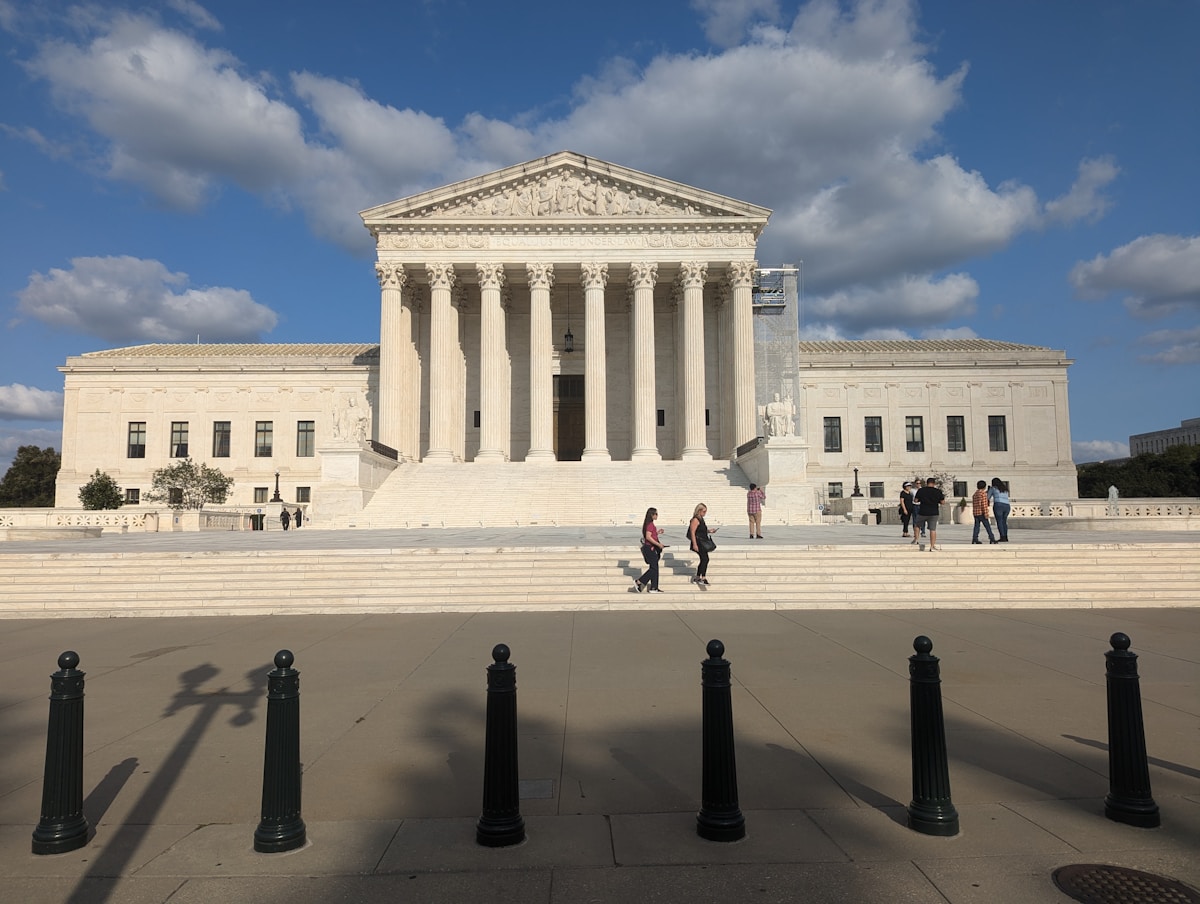
In November 2025, the Supreme Court declined to hear Kim Davis’s petition to revisit the Obergefell v. Hodges ruling that established marriage equality nationwide. The denial came without dissent, a strong signal that the Court considers the question settled. Legal experts widely interpreted this as confirmation that marriage recognition across state lines remains on firm constitutional ground.
Utah’s Legislature Reaffirms Support for Virtual Marriages (2024–2026)
Utah has actively built the legal infrastructure to support virtual marriages:
SB81 (2024) codified statewide guidelines for virtual ceremonies, passing unanimously. State Senator Todd Weiler, the bill’s sponsor, told the Deseret News: “I’m fine with Utah being the Las Vegas of virtual weddings.”
SB110 (2026) initially caused a brief scare when early drafts appeared to restrict remote ceremonies. But Senator Weiler quickly clarified that the restrictive language “had been shared in error.” The final version, signed by Governor Cox on March 24, 2026, only addresses common law marriage. It does not impact virtual wedding ceremonies at all.
The “Digital Marriage Divide” Report (February 2026)
The Information Technology and Innovation Foundation (ITIF) published a report ranking all 50 states on their digital marriage infrastructure. Their finding: only Utah offers a completely online marriage process from application to certified certificate delivery. Most states still require paper forms and in-person visits for at least one step.
The report categorized states into “E-Lopers,” “Paper Trailers,” and “In-Personals,” with 18 states having few to no online options at all. This is a big part of why couples from all 50 states use Utah’s system: it’s often the only practical option for a fully remote legal marriage. Arizona and Maryland are good examples: there’s no Arizona marriage license online and no Maryland marriage license online, so couples there handle the whole thing through Utah and the certificate is recognized back home.
What About International Couples?
The U.S. legal framework applies domestically. International recognition is a separate question that depends on the laws of each country. That said, there’s a notable precedent: in March 2023, Israel’s Supreme Court unanimously ruled that the country must recognize online marriages performed through Utah County’s system. Over 1,200 Israeli couples had used the service, and the court upheld the validity of every one.
The United Kingdom is a useful second example, and a different kind of one. There’s no UK court ruling on Utah ceremonies, but UK law recognizes marriages that were valid where they were celebrated and has no registration step for a marriage that happened abroad, which we’ve written up for British couples here.
If you’re an international couple, we’d recommend consulting with a legal professional in your home country to understand how they handle foreign marriage certificates. But the Utah certificate is an official U.S. government document, and that carries real weight internationally.
For the countries where we marry enough couples to know the paperwork firsthand, we’ve written the registration steps out: Mexico, Colombia, Argentina and Brazil, where the transcrição at the 1º Ofício is the step that matters.
The Bottom Line
No U.S. state has formally refused to recognize a marriage performed through Utah’s online system. The legal protections run deep: centuries-old common law principles, the Constitution, and a federal statute passed just a few years ago.
Is it theoretically possible that you could encounter a confused clerk at a local government office who hasn’t heard of online marriages? Sure. But the legal framework is well settled, and your official Utah marriage certificate resolves nearly any question; it looks like every other Utah certificate because it is one.
This article is for general informational purposes only and does not constitute legal advice. We are not attorneys, and nothing in this article should be taken as a legal opinion or recommendation. If you have questions about how your marriage may be treated in a specific legal context, please consult a qualified attorney licensed in your jurisdiction.
Ready to get started? Visit our Pricing page to see everything included in a Vowed and Clear ceremony, or get in touch if you have questions about the process.