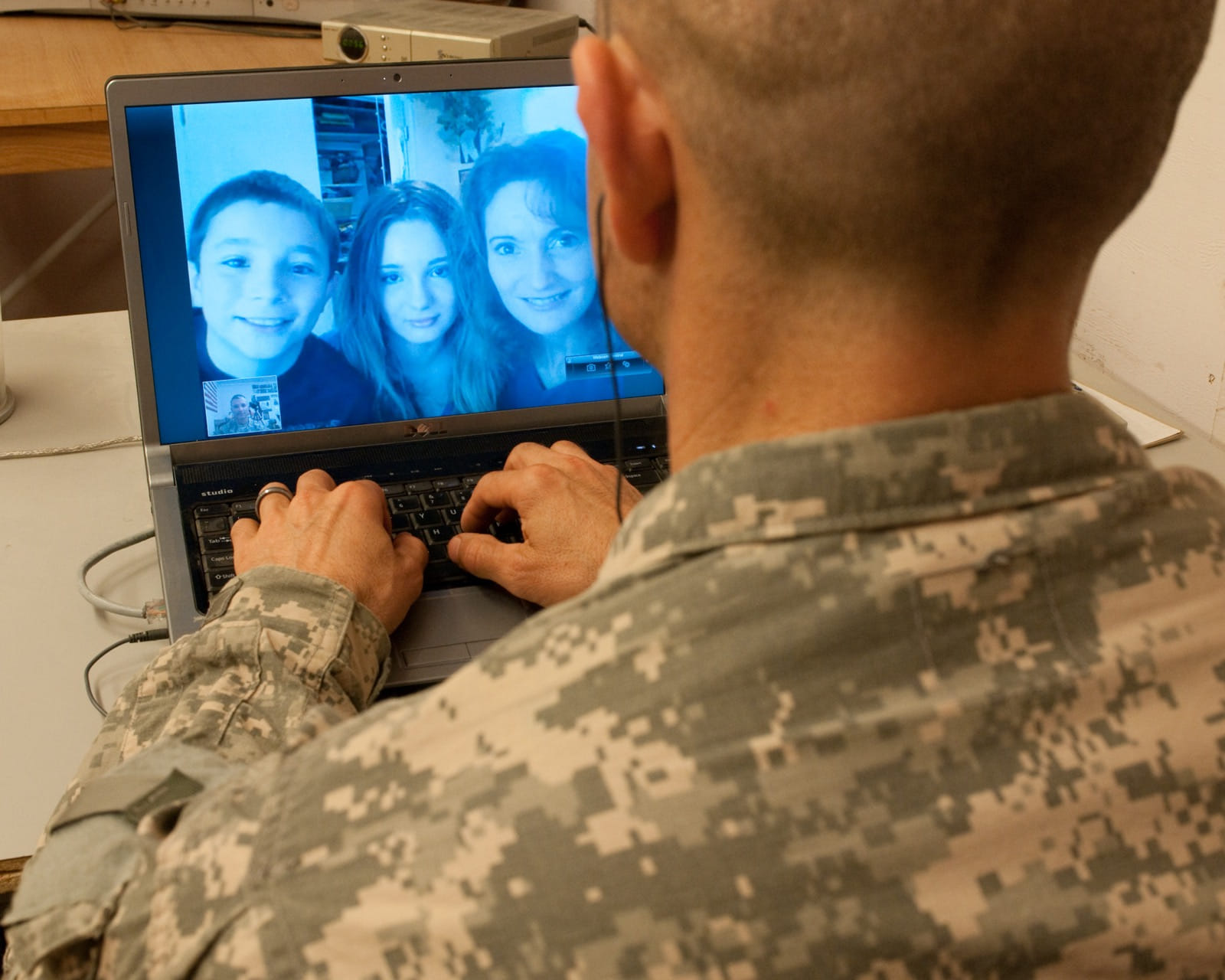
If you are standing in Germany when you say your vows, Germany does not count the marriage. That is not our reading of a grey area, it is the Bundesgerichtshof’s ruling of 25 September 2024 on a couple who married over video from Germany before a Utah officiant. The court held that because their declarations were made on German soil, the marriage was concluded in Germany, German form applied, and the marriage was ineffective under German law. Where a Utah marriage still does real work is for people whose legal life runs under US law, above all US service members and civilians stationed in Germany, and for Germans who marry while genuinely abroad. This guide is for both groups, and it says plainly who should not book.
We have married couples at Ramstein, Grafenwöhr, Stuttgart and Wiesbaden, German couples split between Berlin and Texas, and Germans living in the United States. The German side of the question comes up in every one of those conversations, so here it is in one place, with the court decisions rather than a reassuring paragraph.
Can you get married online in Germany?
No. A German civil marriage is concluded before a Standesbeamter, and § 1311 BGB requires both partners to declare their intention to marry personally and in each other’s simultaneous presence. There is no video variant, no emergency power and no pilot. German embassies and consulates cannot perform marriages abroad either, as the Auswärtiges Amt says outright.
So the question for a couple in Germany was never whether Germany would run a video wedding. It was whether Germany would accept a video wedding run by somebody else. For a long time that was argued both ways. In 2024 it stopped being argued.
What the Bundesgerichtshof decided
The case is XII ZB 244/22, decided on 25 September 2024, press release Nr. 226/2024. Two Nigerian nationals with their habitual residence in Germany married in May 2021 over video before an authority in Utah, while both of them were in Germany. Utah issued a certificate and an apostille. The German Standesamt refused to enter the marriage in the register, and the couple took it up through the courts.
The court’s reasoning runs in three steps, and each one matters for you.
First, where a marriage is concluded is decided by where the declarations are made, not by where the officiant sits. The couple spoke their vows in Germany, so the marriage was concluded in Germany.
Second, Art. 13(4) sentence 1 EGBGB provides that a marriage concluded in Germany may be concluded only in the form prescribed by German law. That form is §§ 1310 and 1311 BGB: in person, together, before a Standesbeamter. A video call to Utah is not that.
Third, and this is the sentence that decides most real cases, the court said it is enough that one of the declarations was made in Germany, “weil damit ein wesentlicher Teil der Eheschließung im Inland verwirklicht wurde”, because a substantial part of the marriage was thereby carried out domestically. The different place where the declarations were received, and the foreign seat of the marrying authority, do not change the analysis.
The result: “die Online-Eheschließung vor der ausländischen Behörde ist im Inland unwirksam.” The couple were then free to marry properly at their Standesamt, and the court noted that the ineffective ceremony did not stand in the way of that.
The lower courts have applied the same rule since. In August 2025 the Amtsgericht Nürnberg (III 15/25) dealt with a couple where one partner was at an embassy abroad and the other joined by video from Germany. One declaration in Germany was enough; the marriage was formally invalid and the Standesamt was right to refuse registration under § 34 PStG.
If you want a one-line version of German law for a video wedding, it is this: the vows happen where the mouths are.
What that means for the three kinds of couples who ask us
Both of you in Germany. Do not book a Utah ceremony expecting Germany to treat you as married. It will not. Not for a residence permit, not for tax class, not for your name, not for a German pension or inheritance. You would hold a genuine Utah certificate that is a genuine marriage in every US state and a nullity in Germany, which is an awkward thing to own. Marry at the Standesamt. If a foreign partner’s documents are the blockage, a wedding in Denmark is the usual nearby fix, and Germany recognizes a Danish marriage under the ordinary foreign-marriage rule because the declarations were made in Denmark.
One of you in Germany, the other abroad. Same answer for German purposes. The BGH said one declaration on German soil is sufficient, and the Nürnberg court applied exactly that. Where the other partner is a US citizen in the United States, the marriage is still fully valid for US purposes, so there are couples for whom this is the right trade. It is only the right trade if you understand that Germany will not follow.
Neither of you in Germany during the ceremony. This is the case the ruling does not reach. A German citizen living in Chicago who marries a US partner over video while both are in Illinois has concluded the marriage in the United States. German law then applies its ordinary rule for marriages abroad: substance (age, no existing marriage) is tested under each partner’s home law, and form is satisfied if the law of the place of celebration was observed. That is the rule the Auswärtiges Amt states on its Eheschließung im Ausland page. Whether a Standesamt, looking at the Utah form question through German eyes, will be entirely comfortable with a ceremony that was itself remote is a fair question with no published answer yet, and we are not going to invent one. Ask the Standesamt that would handle your Nachbeurkundung, in writing, before you book, and keep the reply.
Why US service members in Germany are the exception, and where the line is
Most of our couples in Germany are American, and one of them wears a uniform. For them the German ruling is a fact about German law, not about their marriage.
A Utah marriage is a marriage under Utah law, and under the Full Faith and Credit Clause every US state must recognize it. The Department of Defense follows the same logic: a marriage that was valid where it was performed is a marriage for DEERS, and the documentation requirement for enrolling a spouse is an original or certified marriage certificate. The Utah County certificate is that document. It says nothing about video, because as far as Utah is concerned nothing unusual happened. Housing allowance, TRICARE, command sponsorship and everything else that hangs off DEERS follows.
Where German law does bite is any benefit that Germany itself grants on the basis of marriage: a German residence permit for a non-US spouse, German tax class, a German pension survivor claim. Under the SOFA most service members do not touch those systems, which is why the German ruling rarely reaches them in practice. A German national marrying a service member is the case where it does reach. Germany will not see that person as married, and if a German-law benefit is part of the plan, you need a Standesamt wedding, not us.
Two things you do not need for a Utah ceremony that you would need for a German one. You do not need an Ehefähigkeitszeugnis, the certificate of no impediment that Germany asks foreigners to obtain, because the wedding is not taking place in Germany. And you do not need to appear anywhere. The license is applied for online with a photo ID and a selfie, and a CAC does not work for it, so use a passport or a state driver’s license.
None of that is a substitute for a conversation with your installation’s legal assistance office. They know your command’s sponsorship rules and your partner’s status, and we do not. Ask them, tell them what you read here, and let their answer govern.
Apostille, translation and the German register
If your marriage is one Germany will accept, meaning it was celebrated while both of you were outside Germany, three practical steps follow.
Apostille. Germany and the United States are both parties to the Hague Apostille Convention, so authentication is a single step: an apostille from the Utah Lieutenant Governor’s office, about $45 plus shipping, attached to the certificate. No German consular legalization follows it. The Auswärtiges Amt’s advice is to get the apostille while you are dealing with the issuing authority rather than later from Germany, and that advice is right. Order it with the certificate.
Certified translation. The Auswärtiges Amt states that foreign-language documents generally require a certified German translation, and the individual Standesamt decides whether it wants the original, a certified copy, and which translation it will accept. A translation by a court-sworn translator in Germany is the safe choice.
Nachbeurkundung. Registration of a foreign marriage in the German Eheregister under § 34 PStG is optional. It is not what makes the marriage valid; the Auswärtiges Amt says so explicitly. What it gives you is a German Eheurkunde, which makes every later German transaction simpler. The application goes to the Standesamt of the last German residence of either spouse, or to Standesamt I in Berlin if neither of you ever lived in Germany. The German consulates in the US list the documents: the county-issued marriage certificate, both passports, both birth certificates, and divorce papers for any earlier marriage. Registration costs €80 at the Standesamt, plus €45 per spouse where foreign law has to be applied, and the Berlin office was quoting a wait of at least three years at the time of writing.
The warning you will hear in your own ceremony
Since 6 May 2026 Utah law requires every remote ceremony to include a notice that the marriage “may be invalid in the country where the parties to the marriage reside.” Utah reads that to every couple in every country. For Germany it is not boilerplate. It describes the law.
What it costs and how it works
Our ceremony is $349 plus the $71 Utah County license fee, $420 in total, with professional witnesses at $25 each if you cannot put two adults on the call. The license application is online and takes about half an hour; the digital certificate arrives from Utah County shortly after the ceremony and the paper one by mail. Utah is eight hours behind Germany in summer and in winter alike, so a late-morning Utah slot is early evening for you, and we schedule early Utah mornings for couples who need a German afternoon.
If you are a US service member or a US citizen stationed in Germany, or a German who will be outside Germany for the ceremony, start with how Utah online marriage works, then pricing, or ask us the German question you have not seen answered.
If you are two people who live in Germany and will be in Germany for the ceremony, please do not book. Go to your Standesamt, or to Denmark, and send us a photo.
This guide is general information, not legal advice. We are a ceremony provider, not a law firm, and we are not qualified in German law. The BGH decision of 25 September 2024 and the Amtsgericht Nürnberg decision of 29 August 2025 are summarized from the published press release and case reports linked above; read the originals or have a German lawyer read them for you before you rely on anything here. Nothing on this page is immigration advice for the United States, Germany or anywhere else. For a US immigration matter, note that INA §101(a)(35) requires a couple who married while in different places to be together in person after the wedding and before filing for the marriage to count, and talk to a US immigration attorney about your case. Everything above reflects published sources as at 10 September 2026 and the law changes.