· Legal · 8 min read
Washington's 3-Day Marriage Waiting Period: How It Works and Why There's No Way Around It
Washington makes every couple wait 3 days after applying for a marriage license, and RCW 26.04.180 has no waiver, not even by court order. Here's the exact day-counting math, the 60-day window, and the one legal route past the wait.
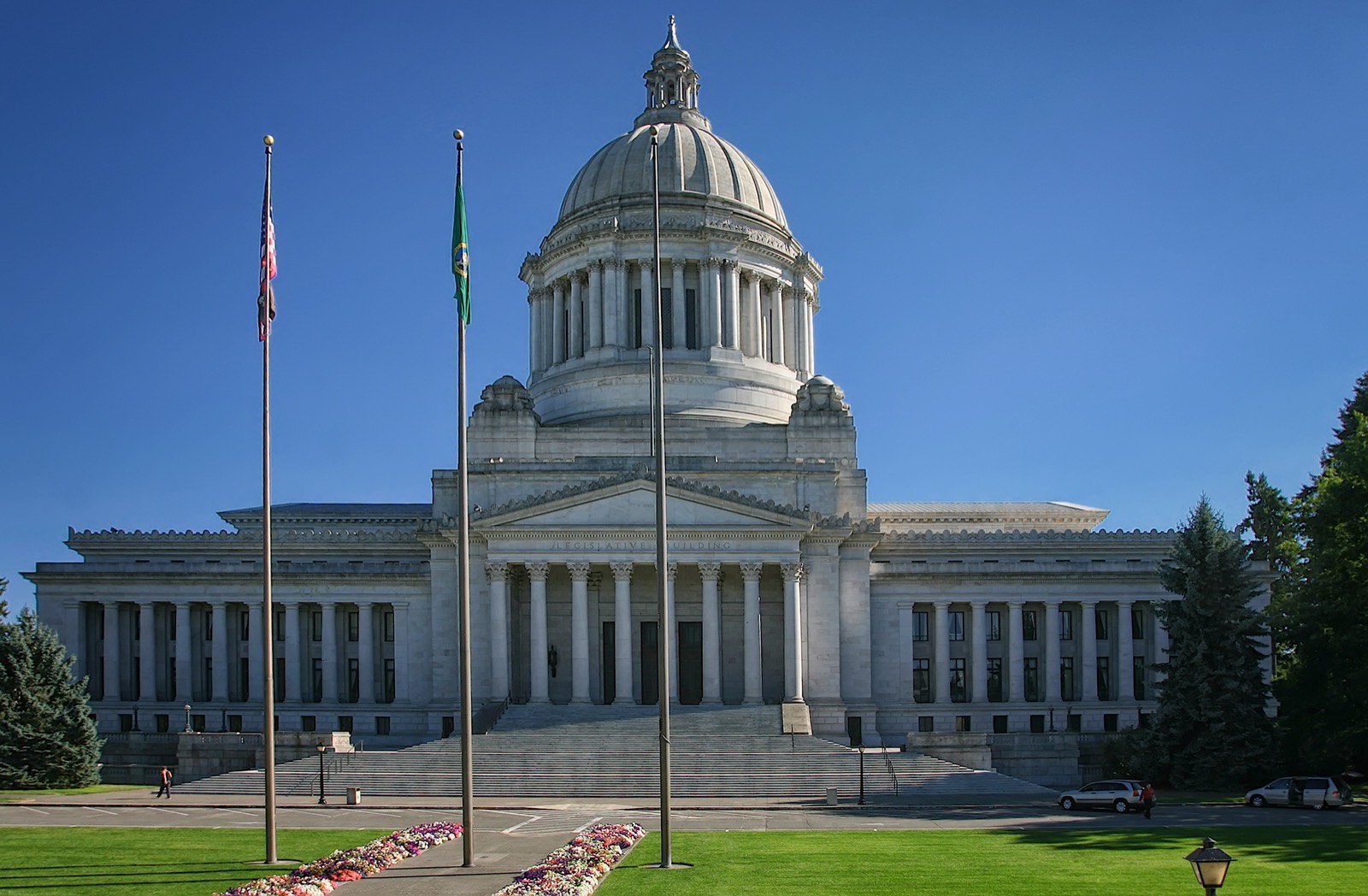
Apply for a marriage license anywhere in Washington and the county auditor will hand you a document you’re not allowed to use yet. Not for 72 hours, no matter who you are, no matter what’s happening in your life. Most states with a waiting period built in an escape hatch. Washington built a wall, and it’s been standing since 1939.
Washington requires a 3-day waiting period on every marriage license. Under RCW 26.04.180, the license “may not be used until three days after the date of application,” and it stays valid for 60 days after issuance. No one can waive the wait, including a judge. Apply Friday, marry Monday at the earliest. If that timing doesn’t work for you, the legal alternative is Utah’s online marriage, which has no waiting period and is recognized in Washington.
Here’s the full mechanics, verified against the statute and the county auditors who enforce it.
What RCW 26.04.180 actually says
The whole rule lives in one sentence of state law. RCW 26.04.180 reads: “The county auditor may issue the marriage license at the time of application, but shall issue such license no later than the third full day following the date of the application. A marriage license issued pursuant to the provisions of this chapter may not be used until three days after the date of application and shall become void if the marriage is not solemnized within sixty days of the date of the issuance of the license”[1].
Two clocks are running in that sentence. The first starts the day you apply: three days must pass before the license can be used. The second starts when the license is issued: you have 60 days to hold the ceremony before the license dies.
Notice what the statute lets the auditor do. She can print your license the moment you apply, and in practice every county does. Same-day issuance changes nothing, though. The paper in your hand is inert until day three.
Counting the three days
The days are calendar days, weekends and holidays included. Clark County publishes the math directly: the waiting period begins “the day you complete your application and make payment,” and if you apply on a Monday, the first day you may marry is Thursday[2]. Same pattern all week:
| You apply on | Earliest day you can marry |
|---|---|
| Monday | Thursday |
| Tuesday | Friday |
| Wednesday | Saturday |
| Thursday | Sunday |
| Friday | Monday |
One wrinkle worth knowing if you apply by mail: King County notes that the waiting period begins when the license is issued, not when you drop your application in a mailbox[3]. A mailed application sits in processing before the clock starts, so couples in a hurry should apply in person or finish the county’s online-plus-counter process, where application and issuance happen the same day. The fee runs $169 in King County[3] and $170 in Snohomish[4]; the full application walkthrough is in our King County marriage license guide.
The 60-day window
Once the wait ends, you get 60 days of usable license. The statute voids it “if the marriage is not solemnized within sixty days of the date of the issuance”[1], and counties describe the same window as 60 days following the waiting period[2]. Miss it and there’s no extension. You apply again, pay the county again, and sit out three more days. For anyone planning a wedding on a normal timeline, apply two to four weeks out and both clocks become invisible.
Why you can’t get it waived
This is the part that surprises people, because in most states a waiting period is soft. Texas has a 72-hour wait, and its statute lists four ways around it: active-duty members of the armed forces are exempt, so are certain Department of Defense employees and contractors, so is anyone who completes the state’s premarital education course, and a judge can sign a written waiver for good cause[5]. Illinois waits just one day, and even that evaporates if a circuit court orders the license effective on issuance[6].
Washington’s statute contains none of that machinery. Read RCW 26.04.180 top to bottom and you won’t find a waiver subsection, because the legislature never wrote one[1]. Active-duty military get no exception, and a premarital course buys you nothing. No judge in the state has the power to shorten the wait either, since courts can’t waive a requirement the law gives them no authority over. The counties say it without hedging. King County: the waiting period “cannot be waived under any circumstances, including court order”[3]. Clark County: “The three day waiting period cannot be waived”[2]. Snohomish County repeats it word for word[4].
We checked this carefully, because “no exceptions” claims are usually wrong at the margins. Not here. If someone tells you a Washington judge waived their waiting period, they’re misremembering another state.
Where the three days came from
The statute’s own history note traces the rule to a 1939 session law, chapter 204, with amendments in 1943, 1953, 1963, 1979, and 1985 that never touched the core wait[1]. Waiting periods spread across the country in the late 1930s as legislatures tried to slow down impulsive elopements and give either party a chance to reconsider before the license became live. Most states that kept a waiting period eventually bolted on exceptions for military deployments or judicial emergencies. Washington’s legislature has had 87 years to add a valve and has declined every time.
If one of you can’t get to the counter
Washington does soften one requirement: both partners don’t have to appear at the auditor’s office together. RCW 26.04.150 lets a person get the application by mail and execute it before a notary public[7], and counties run that as an absentee option for one party. King County says only one applicant needs to appear in person[3], and Snohomish requires both parties present “unless one party has already signed the application in front of a notary”[4].
Two limits keep that from being a loophole. The notarized signature covers the application only, and it doesn’t touch the clock. And the ceremony itself is strictly in person: RCW 26.04.070 requires the couple to declare they take each other as spouses “in the presence of” the officiant and at least two attending witnesses[8]. No proxy stand-ins, no video ceremony on a Washington license. If your plan is a quick civil ceremony once the wait ends, our Seattle courthouse wedding guide covers how that day works.
When the wait matters and when it doesn’t
For most couples, honestly, it doesn’t. If your wedding is three weeks out, the 3-day wait is a rounding error. Apply early, put the license in a drawer, and the whole thing is a non-event.
The wait bites when the calendar isn’t yours to control. A good share of the couples we marry are military, often with one partner already gone or about to be, and a deployment window out of Joint Base Lewis-McChord doesn’t stretch because a statute says wait. Same for a parent in hospice who wants to see the wedding, a partner whose insurance or benefits enrollment closes on a fixed date, or one of you flying out of the country Sunday when the license went in on Friday. Texas would hand those couples a waiver. Washington hands them the same three days it hands everyone, and there is no counter to argue at.
The route with no waiting period
That’s exactly the situation Utah’s online marriage system exists for. Utah issues marriage licenses through a fully online application with no residency requirement, and the Utah Courts put its speed plainly: “There is no waiting period before you can get married. As soon as you get your license, you can get married”[9]. The license stays valid for 32 days[9], the ceremony happens on a video call with a licensed Utah officiant, and both partners appear live on camera along with two witnesses, so nobody is standing in for anybody. Washington recognizes the resulting marriage under the Full Faith and Credit Clause of the U.S. Constitution, the same way it recognizes a marriage from Idaho or Texas.
Through Vowed and Clear the whole thing is a flat $370: $299 for the service and ceremony plus the $71 Utah license fee. Couples on a genuine deadline can go from application to married in a day; the details are on our same-day marriage page. And since the ceremony is a video call, a couple split between Tacoma and a ship somewhere in the Pacific can still be in the same “room” for it. The certificate is a state-issued record of a legal U.S. marriage. If your marriage connects to any immigration matter, talk to an immigration attorney before you book anything, with us or anyone else.
For the full side-by-side of the auditor route and the online route, fees and all, see our Washington online marriage page.
The short version: Washington’s three days are real and immovable, and for most couples completely harmless. Plan ahead and you’ll never feel them. But if you’re the couple with a deployment date, or a Friday license and a Sunday flight, the state has no valve to offer you, and the online route exists because somebody had to build one.
Sources:
[1] RCW 26.04.180, marriage license time limitations, Washington State Legislature
[2] Marriage license waiting period, Clark County Auditor
[3] Marriage licensing, King County Recorder’s Office
[4] Marriage licenses, Snohomish County Auditor
[5] Texas Family Code sec. 2.204, 72-hour waiting period and exceptions, Texas Legislature
[6] 750 ILCS 5/207, effective date of marriage license, Illinois Compiled Statutes
[7] RCW 26.04.150, marriage license application by mail and notarized execution, Washington State Legislature
[8] RCW 26.04.070, solemnization and witness requirements, Washington State Legislature
[9] Marriage licenses, Utah State Courts self-help center